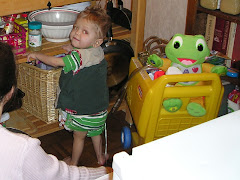
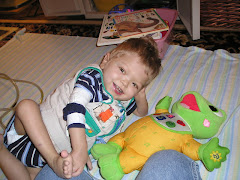
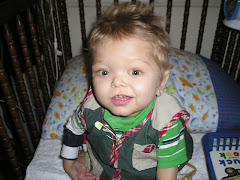
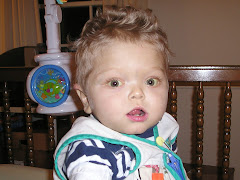
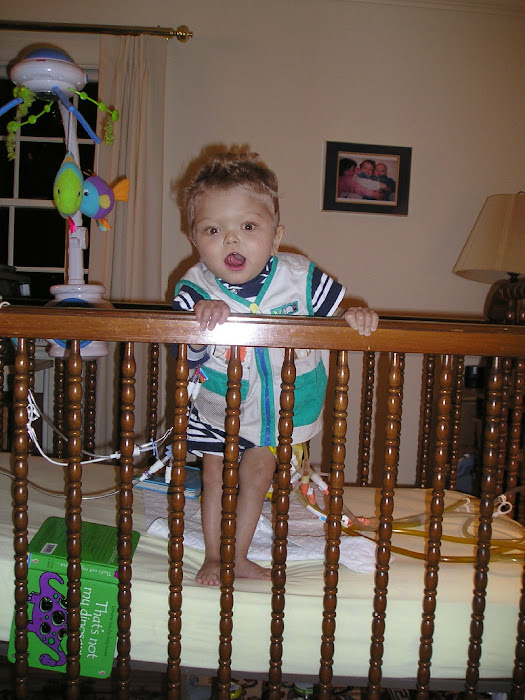
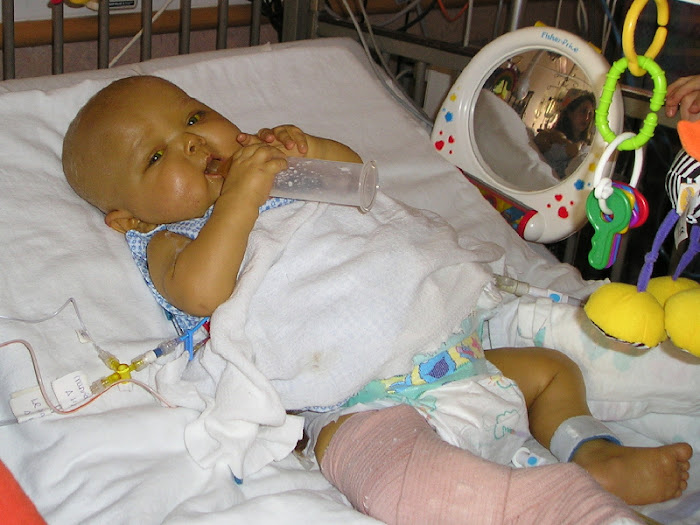
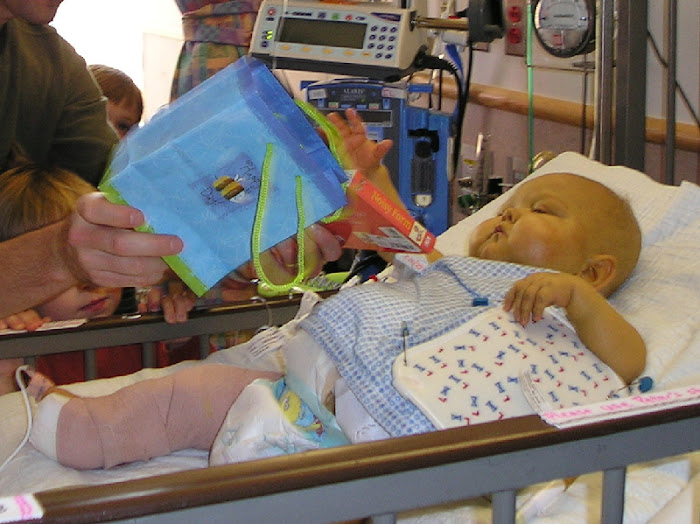
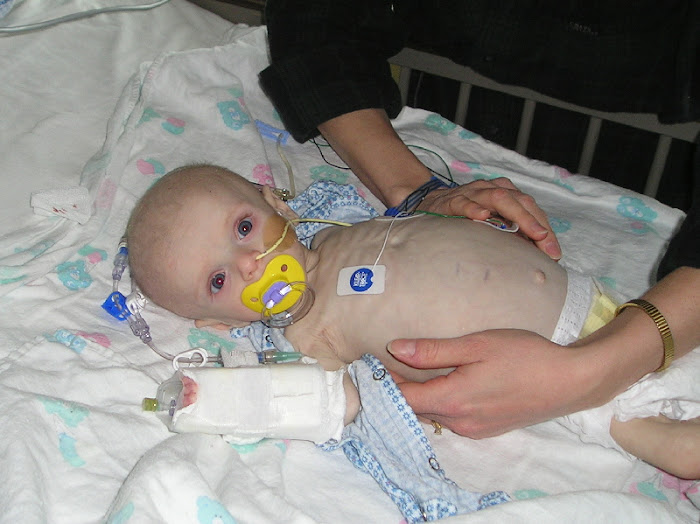
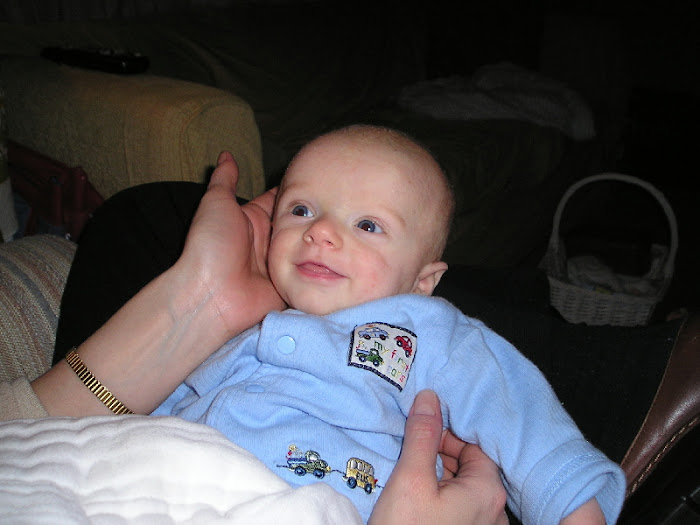
Dr. Jennings met with us today. Peter was scheduled for surgery tomorrow - a shunt procedure to decrease portal hypertension so that we could proceed with bowel closure several weeks later. That surgery is now cancelled, as a decision made together with him and us. The concerns with the shunt are that the liver may not receive enough blood for good perfusion, and that the liver may be taxed too hard with such a major surgery at this time. Peter's biopsy last month shows that Peter's liver disease has not progressed, but that he still has some bridging fibrosis. That makes his liver more vulnerable in recovery from major surgery.
Our plans now are going to involve a different surgical approach in a few months. Dr. Jennings will likely try to attach the lower section of bowel to Peter's stomach so that food can pass through the bowel and less come out the fistula. Or he may try to close the fistula, but the fistula has huge collateral blood flow and tying off the circulation may increase portal hypertension, adversely affecting the liver. (Hence one of the reasons we had been planning for a shunt procedure in the first place.) Both surgical approaches are on the drawing board at the moment, with a leaning towards the first approach.
The thought is that if we can utilize the bowel enough to get off TPN, the liver has a good chance of healing. Then the bigger surgeries required to finish rerouting the collateral circulation and closing the fistula may be performed at some point later on if possible. If the bowel closures cannot be performed, even if we can just get Peter off TPN it would ultimately help his liver and be better for him.
None of this is an easy solution, and plans of course may detour again, but we are all optimistic that this is all in Peter's best interest. We were again reminded by Dr. Jennnings that there is no other person in the world like Peter. Between the bowel, the liver, the portal vein clot... he is quite unique. The fact that he is not only alive, but is alive and thriving, is truly remarkable. Omegaven saved his liver and has undoubtedly extended his life on TPN. Without Omegaven he would have either needed to go on for transplant or would have died.
So, as plans for a different surgery unfold, more will be posted. For now, we will return home tomorrow and hopefully get around to posing some of the photos that are long overdue on this site.
Wednesday, May 5, 2010


Monday, April 19, 2010
March and April
Lots of "boring" news, but the really exciting stuff will be coming soon when we go to Boston for SURGERY! Peter went up to Children's Boston last week for a liver biopsy and CT to help plan for abdominal surgery. The fistula continues to put out more and more amounts, requiring continued weekly electrolyte labs, often followed by yet another tweaking of his TPN (IV nutrition) recipe to keep on top of the electrolyte changes produced by the fistula outputs. Dr. Jennings, one of the surgeons at Children's, met with us when we went up in March, and it seems like surgery is the best solution for Peter at this point. It has been a long hope to reconnect the bowel, but for Peter a reconnection is not so simple. The first thing that will need to be done is the placement of a shunt which will bypass the clot in the portal vein, thereby decreasing the portal hypertension that Peter has in his abdomen. That will then assist the gut in its circulation and overall health and ability to digest food, as well as decrease the tendency to bleed as much during surgery. I don't yet know the plan from there, but discussions have included surgery to close the fistula as well; I am not sure of the timing on that yet.
The PICC line dressing was solved with another style of statlock that I found online. It has a deeper, wider indent at the top, which allows for more clearance room between the insertion site and the statlock. With that, we decrease the risk of contamination of the PICC site, as the statlock does not rub up near the insertion. If I get a chance to take and download a photo I will. (The photo below is from an earlier post and it has the old statlock shown.) The new statlock style, if anyone is looking at this and wanting to try it to resolve a similar situation, is PIC0220, made by Bard. The other thing we did to make the dressing change less subject to contamination, was to add another set of sterile gloves to our dressing change, so that the line is kept as clean as possible. I don one pair of sterile gloves during the removal of the old statlock, after removing the tegaderm with nonsterile gloves. Then I put on a new pair of sterile gloves to clean the line and put on the new statlock. We use a third pair on my husband who holds the catheter in place at the insertion site as the old dressing is being removed and I am changing gloves, but before it is cleaned with chloraprep, as Peter is still prone to wanting to move around whether the PICC line is secure or not.
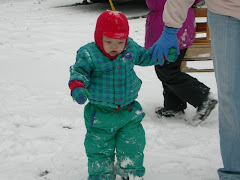
On a non-medical front, Peter is very close to running now! He runs like a toddler at this point. It is more than a brisk walk, but not quite the run that a 3 or 4 year old would use. The look on his face as he runs is priceless. He is very pleased with himself and his "great speed." The cheers that his family and nurse give him certainly add to his satisfied self-image... as it should be.
I am having technical problems adding photos tonight, but hopefully can download his running video soon, as well as some new photos of Mr. Peter.
The PICC line dressing was solved with another style of statlock that I found online. It has a deeper, wider indent at the top, which allows for more clearance room between the insertion site and the statlock. With that, we decrease the risk of contamination of the PICC site, as the statlock does not rub up near the insertion. If I get a chance to take and download a photo I will. (The photo below is from an earlier post and it has the old statlock shown.) The new statlock style, if anyone is looking at this and wanting to try it to resolve a similar situation, is PIC0220, made by Bard. The other thing we did to make the dressing change less subject to contamination, was to add another set of sterile gloves to our dressing change, so that the line is kept as clean as possible. I don one pair of sterile gloves during the removal of the old statlock, after removing the tegaderm with nonsterile gloves. Then I put on a new pair of sterile gloves to clean the line and put on the new statlock. We use a third pair on my husband who holds the catheter in place at the insertion site as the old dressing is being removed and I am changing gloves, but before it is cleaned with chloraprep, as Peter is still prone to wanting to move around whether the PICC line is secure or not.
On a non-medical front, Peter is very close to running now! He runs like a toddler at this point. It is more than a brisk walk, but not quite the run that a 3 or 4 year old would use. The look on his face as he runs is priceless. He is very pleased with himself and his "great speed." The cheers that his family and nurse give him certainly add to his satisfied self-image... as it should be.
I am having technical problems adding photos tonight, but hopefully can download his running video soon, as well as some new photos of Mr. Peter.
Monday, March 1, 2010

We don't like the new PICC afterall
There, it's official. We do not like the new PICC that Peter got in January. I do like a PICC line in general, but not this new one. The biggest frustration with it is the placement. This may be a very boring entry for anyone who does not have a PICC line, but for someone familiar with PICCs, perhaps it will be of interest. I do need to vent this frustration, so I am posting it.
For the last three years, Peter's PICC lines were secured with a little adhesive device called a Stat-Lock, which was located about an inch below the actual insetion site of the PICC line. It was a good set-up, as the Stat-Lock was capable of lasting up to a month and did not need to be kept sterile since it was so far away from the insertion site of the PICC.
The new line has the Stat-Lock actually just one or two millimeters from the insertion site, surrounding the site itself, and now needs to be changed every week with the dressing change. The Stat-Lock device has these little "doors" that keep the PICC line from popping back off the device, and these tiny movable posts on which the PICC cross post need to be landed. Somehow this is all to be kept sterile as we are opening and closing the little doors to remove the old Stat-Lock, and then opening and closing little doors as we put on the new Stat-Lock. It can be done on a mannekin arm or on an adult that stays still, but on a four-year-old child, it gets a little tricky, even with another adult immobilizing the arm and Peter's body. To remove the old Stat-Lock, we need to lift up the PICC line, which then tries to work its way out of Peter's arm while we frantically work on keeping it from sliding out, sterile gloves becoming dangerously close to non-sterile, if not truly non-sterile despite our best efforts. It is like trying to manipulate a wet noodle as it wants to slide out and we are trying to push on it to stay in. Once the entire site is cleaned, we can put the PICC line down and hold it more securely, but then we have to lift the PICC line again to place the new Stat-Lock on... trying to be sterile, landing it just a millimeter or two away from the sterile insertion site, wet noodle thing happening again.
The whole procedure is ridiculous in light of the set-up we used to have. We have had so many people remark on how well we maintained his old site and how remarkable it was that he didn't get PICC line infections. With this new line sliding in and out during dressing changes and with the Stat-Lock so close to the insertion site, I will be the one amazed if we are able to keep Peter's line infection free, or from just sliding on out during one of our dressing changes. We are hearing from some of Peter's nurses that this is the current procedure for PICC lines, with the Stat-Lock where our new one is. I will not be surprised to see that the rate of infection also rises with this current trend.
For the last three years, Peter's PICC lines were secured with a little adhesive device called a Stat-Lock, which was located about an inch below the actual insetion site of the PICC line. It was a good set-up, as the Stat-Lock was capable of lasting up to a month and did not need to be kept sterile since it was so far away from the insertion site of the PICC.
The new line has the Stat-Lock actually just one or two millimeters from the insertion site, surrounding the site itself, and now needs to be changed every week with the dressing change. The Stat-Lock device has these little "doors" that keep the PICC line from popping back off the device, and these tiny movable posts on which the PICC cross post need to be landed. Somehow this is all to be kept sterile as we are opening and closing the little doors to remove the old Stat-Lock, and then opening and closing little doors as we put on the new Stat-Lock. It can be done on a mannekin arm or on an adult that stays still, but on a four-year-old child, it gets a little tricky, even with another adult immobilizing the arm and Peter's body. To remove the old Stat-Lock, we need to lift up the PICC line, which then tries to work its way out of Peter's arm while we frantically work on keeping it from sliding out, sterile gloves becoming dangerously close to non-sterile, if not truly non-sterile despite our best efforts. It is like trying to manipulate a wet noodle as it wants to slide out and we are trying to push on it to stay in. Once the entire site is cleaned, we can put the PICC line down and hold it more securely, but then we have to lift the PICC line again to place the new Stat-Lock on... trying to be sterile, landing it just a millimeter or two away from the sterile insertion site, wet noodle thing happening again.
The whole procedure is ridiculous in light of the set-up we used to have. We have had so many people remark on how well we maintained his old site and how remarkable it was that he didn't get PICC line infections. With this new line sliding in and out during dressing changes and with the Stat-Lock so close to the insertion site, I will be the one amazed if we are able to keep Peter's line infection free, or from just sliding on out during one of our dressing changes. We are hearing from some of Peter's nurses that this is the current procedure for PICC lines, with the Stat-Lock where our new one is. I will not be surprised to see that the rate of infection also rises with this current trend.
Thursday, February 25, 2010
GI plans
It looks like we will plan to do a fluoroscopy study late next month to find out what is going on inside Peter's GI tract. The fistula continues to put out more fluid than it used to, even with the feeds less than half of what they had been when we went up to Boston last time.
A fluoroscopy study on Peter is never easy because he has several places where the contrast fluid leaks out after it is put into his G-tube. The leakage of fluid into his dressing and into his ostomy bags then makes it impossible to see what is going on inside. I am not sure how we are going to work this out, but hope if it involves the removal of ostomy bags during the procedure that we are able to keep the PICC line clean!! We've managed it before, and with many prayers will hopefully manage to keep the line clean again. Dr. Kamin and Dr. Jennings will be there for the one to two hour procedure, and possibly Dr. Kim as well. Dr. Jennings and Dr. Kim are the surgeons who are familiar with Peter's anatomy.
Peter is still on TPN 7 nights a week, as we can't advance his feeds to where they had been before. We are managing to keep his sodium levels stable though, only needing to add a little 1/2 normal saline here and there when his outputs exceed his new baseline.
Please keep Peter in your prayers as we sort out his fistula issues. We are praying for test results that show us that it is time to close the fistula, as well as the doctors finding that it would not be as difficult to surgically close as feared.
A fluoroscopy study on Peter is never easy because he has several places where the contrast fluid leaks out after it is put into his G-tube. The leakage of fluid into his dressing and into his ostomy bags then makes it impossible to see what is going on inside. I am not sure how we are going to work this out, but hope if it involves the removal of ostomy bags during the procedure that we are able to keep the PICC line clean!! We've managed it before, and with many prayers will hopefully manage to keep the line clean again. Dr. Kamin and Dr. Jennings will be there for the one to two hour procedure, and possibly Dr. Kim as well. Dr. Jennings and Dr. Kim are the surgeons who are familiar with Peter's anatomy.
Peter is still on TPN 7 nights a week, as we can't advance his feeds to where they had been before. We are managing to keep his sodium levels stable though, only needing to add a little 1/2 normal saline here and there when his outputs exceed his new baseline.
Please keep Peter in your prayers as we sort out his fistula issues. We are praying for test results that show us that it is time to close the fistula, as well as the doctors finding that it would not be as difficult to surgically close as feared.
Subscribe to:
Posts (Atom)