Friday, July 20, 2012

Peter's gray and brown striped teeth


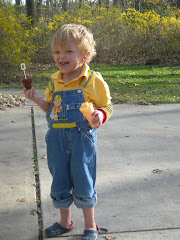
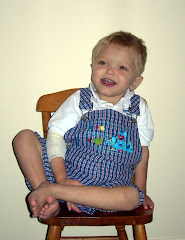
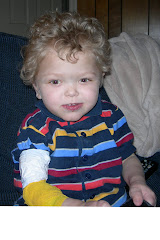
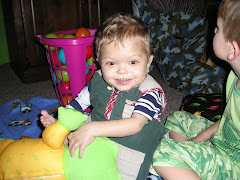
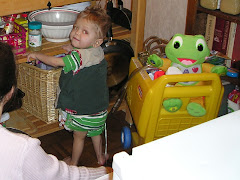
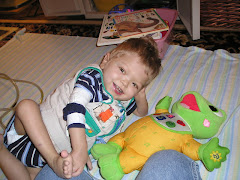
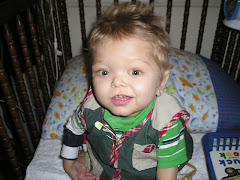
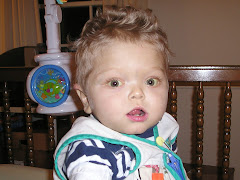
These are the photos of Peter's teeth.  As stated before, they are this color due to very prolonged, quite elevated bilirubin as an infant/toddler.  Peter's bilirubin levels were elevated from about age five or six months through age two, with a good handful of prolonged high bili levels ranging from above 10 to low 30s.  Usually bili-stained teeth are only seen on primary teeth, I have been told.  Peter's primary teeth are the ones that have some white visible, and the gray in his primary teeth is quite dark for bili-staining.  Peter' bilirubin levels were also elevated when his secondary teeth were forming, so we see the staining in those teeth as well.  The front six brown and gray striped teeth are his secondary teeth.

The choices of how to fix the color are realistically only two so far:  hide them with Snap-On-Smile or veneers that are non-bonded as to keep the teeth in best condition for adulthood.  With both choices, the plan is to crown the teeth as an adult.  As a growing child, crowning cannot be done because the gums normally recede quite a bit throughout childhood and the dark teeth would become visible between the crown and the gumline.  This is the same rationale for using a non-bonded technique for the veneers, as they would have to be replaced every year or two.

I am hoping that someone in the world of pediatric dentistry has come up with another solution and can share it here.  We may post the images online elsewhere too, in hopes of finding an answer.  The skilled dentists we have seen have solicited many, many colleagues, so there may not be another answer anywhere yet, but maybe someone will be inspired in finding a solution upon seeing Peter's teeth.  Dr. Kamin has pondered whether laser might be effective in rendering the dark bilirubin stains invisible, as bili lights do for the newborn with high bilirubin, but he is a GI doctor and has suggested that as something to ask about.  The stains are throughout the teeth, so microdermabrasion will not work.  The teeth can be bleached from the inside out, but to do so will mean a root canal for each tooth and then Peter is left will a mouth full of dead teeth.

So, if anyone has ideas, please share them here.  Thank you!

Friday, July 6, 2012

The spleen, the ostomy, and the hope

Good news on the spleen.  The ultrasound shows that the spleen may possibly measure smaller than it used to, but that is to be taken with a grain of salt (or sodium - haha), as the measurements can vary depending upon the angle the measurements are taken.  There were not clots or concerns about the spleen other than its usual big size and the portal hypertension associated with it, along with Peter's low platelets and low white count.  Those issues are concerning, but not life-threatening at this point, as we had started to worry when the spleen felt hard and larger back in early June.

That said, discussions on the spleen include further evaluation by interventional radiology (IR) to see if it would be good to embolize the spleen to improve the blood counts and possibly lower the portal hypertension.  We will meet with one of the IR docs with whom Dr. Kamin has been talking, when we return to Boston.  He will review Peter's history and talk with us about the ins and outs of embolizing the spleen and whether it could be helpful or harmful to Peter.

The endoscopy on this trip also went well.  Dr. Kamin still sees that there are two varices (varicose veins) in the esophagus, but they are a little less prominent than before.  It is hard to tell if they are the same two varices as before or two new ones in the same location.  He banded them and we will look again in 4 to 6 months.  The fact that they look less prominent also is a good indication that the spleen and portal hypertension are not worse than they used to be.

The bad part about the endoscopy was Peter's last minute resistance to the mask used by anesthesia.  He had been so cooperative up until the mask went on and then fought it.  He was understandably worried about the sore throat that he would have upon waking up post endoscope.  It is a challenge trying to help a child when that child has to act grown up in a situation but has the fears of a child.  He did have a sore throat as he knew he would, but thinks that next time he can use the mask as he has before and wants us to plan on a really special treat after the procedure; the book I got him and the surprise gift a friend gave him apparently wasn't quite enough of a treat.  He is requesting a trip to Trader Joe's as his next post-procedure treat!

We met with Dr. Kamin and Meghan (Peter's main nurse for CAIR) later and discussed the next plans.  Dr. Jennings was supposed to be there as well but was unable to be there.  Dr. Kamin filled in what he would have said.  We had run into Dr. Jennings the day before, as we were in the waiting room to see Meghan, and so I had some idea that we might discuss the ostomy surgery, but he wanted to get the results of the scope and ultrasound from Dr. Kamin first.  The plans that they have come up with are that we will get an MRI of Peter's circulation to see if/how things have changed since the fistula surgery last Fall.  Then we will discuss HOW to take down the ileostomy so we can give Peter full use of his bowel and hopefully finally make those final strides off TPN!!  The timeline for this is tentatively as soon as August!  Looking at the history of planning surgeries for Peter, I know to take this all as just a possibility, as time and again the surgeries we talked about would get scrapped or moved to a future date.  If that happens, it is not a bad thing, as so far, every surgery has gotten Peter progressively better.  The wait has always been worth it in the end.  I know that the imaging will determine much about the surgery.  If the circulation around the ostomy is quite concerning, the surgery may need to be customized, possibly even done in stages, as to not cause too much bleeding or increased portal hypertension.  It may be that IR decides that embolizing the spleen will help and do that sometime before the ostomy surgery.  There is much to unfold, but we expect to have many answers after this next visit once the MRI is performed and Drs. Jenning, Kim, and Kamin review the circulation, and after we all see what IR has to say. 

Monday, June 25, 2012

Peter's last check up was great in terms of weight gain.  His arm measurements indicated that the weight was real weight, not just fluid gain.  We decided to give sprironolactone a try again.  Spironolactone is a diuretic which should help Peter to lose some of the ascites fluid along with some of the sodium.  That should then help us to be able to afford him a little more sodium in his diet without the extra fluid accumulation.  It did not help the last time he tried it, but I can't figure out how to decrease sodium further, given that a significant part of his diet is yogurt and Lactaid, both of which have naturally occuring sodium in them.  His formula is one of the lower sodium formulas.  He eats only low sodium foods on top of that, and his TPN is as low in sodium as they can get it too.  So, we are trying this diuretic again.  I can't tell if it has helped, but it has not seemed to cause a problem at any rate.

He has been on ursodiol now for about a month, and that has seemed to be quite helpful with him digesting fat.  The liver numbers seem to indicate that this med has helped as well.  Ursodiol is a bile salt, and is often used in gall bladder disease and in TPN cholestasis.  I think it may be used for short gut as well, but not totally sure of that.

Vitamin D levels indicate that his levels are still is too low on 2000 IU/day, so he is now going up to 10,000 IU/day for 6 weeks to rebuild his levels.  His dexa scan two months ago indicates that he still has osteopenia, which is one of the downsides to long term TPN.

So the down side to the visit is that Peter's spleen is considerably larger by physical exam than it was back in February when the last endoscopy was done to band off enlarged esophageal varices.  ( I see that I forgot to post about that, but basically he had a scope done to check for large varices and Dr. Kamin did end up banding two of them that were a little large.  This was done as follow up to the  bleed he had after his fistula surgery last Fall.)  Peter was due to have another scope in August, again as follow up, but in light of the spleen size and the platelet decrease, he wants Peter back sooner to rescope and check for new or enlarged varices.  Instead of returning in 8 weeks as hoped, we return in 3 weeks from the last visit.  If the varices in the esophagus are very large, they can bleed and not stop.  Banding can be done to shrink the varices and keep that situation from occurring.  Meanwhile, we are looking into what can be done about the spleen itself.   Peter's platelet count has been in the low 30,000 range the past couple months. He is not bleeding, but the number can't get too much lower without real concern for spontaneous bleeding.  A splenectomy is likely not a possibility, but there may be a way to embolize the circulation to it to decrease its size and restore the platelet and white count values to more normal levels.  The procedure is called a partial splenic embolization.  We should know more about i,t and whether it is the route to go with Peter's spleen, after this trip.

Peter is getting a little tired of the trip lately.  It is hard for him to understand why we need to keep going up there.  He used to love the trip, but we are going so often over the last year, that there isn't much time to build up anticipation for the next trip.  We should get to a point again where the trips space out further, and we are just viewing this as more bumps in the road, but I will have to figure out new ways to make the trip fun again. 

Bilirubin-stained teeth

We have been making the circuit with dentists, trying to find out what to do to improve the look of Peter's teeth.  We've been to three so far, each one further away than the last.  The last one took two hours to get to, but has a great reputation and I know him from years ago.

Peter's front top two teeth, and bottom four teeth, are slate-gray, with some tea-brown color at the tips.  These are his permanent teeth.  His baby teeth are discolored as well, but not quite as dramatically.  The discoloration is due to sustained elevated bilirubin that occurred during infancy as his teeth were still in formation.  He had high bilirubin for many months, sometimes with levels in the mid to upper 20s range sustained. 

The latest dentist took photos of Peter's teeth and gave a copy to me.  I'll post them with this blog one of these days soon.

Omegaven helped his liver, thereby bringing down the bilirubin levels, and ultimately kept him from needing a multivisceral transplant.  Usually a child with this level of bilirubin has either succombed to the liver illness or has gone on for liver transplant. 

The dentists are puzzled with what to do for someone like Peter who has pulled through such a long illness.  We may be looking at veneers, but there is concern that in a six year old child they will not have a long life before needing to be redone where the gumline becomes visible as the child grows.  There is also concern that the veneers will pop off and he could aspirate them.  The veneers would be done without the usual preparation so that they will be stronger and able to withstand the probable braces he needs as well.  Bleach is not an option unless it is done after a root canal so the teeth could be bleached from within.  That then leaves a person with dead teeth though, and that is not a great option either.  As an adult, he will likely get veneers or crowns and they will last many years, but as a child the gumline apparently recedes some every year until adulthood.  (In addition to ostomies, wound vacs, TPN, and such,  I am learning a lot about teeth through Peter's illness too!) 

The latest dentist suggested that if Peter is OK with his teeth color, which he is so far, then maybe just let the teeth be until he becomes concerned about it.  As I type that, I realize that advice sounds cold, but he did not mean it that way.  His concern was that it may be in Peter's best interest to leave the teeth be so that when he is able to have something done for them on a more permanent basis, he has strong teeth to work with.  Meanwhile, both dentists that gave us advice are continuing to look for more solutions to this problem.  They have been consulting colleagues across the country and have been very compassionate about Peter's situation. 

With both of the pediatric dentists we have seen over the last 3 weeks, I have been close to tears with their kindness and empathy.  They both clearly have that great quality that we have seen in Dr. Kamin and Dr. Jennings, which is to take that child's situation and own it and repeatedly work on finding a solution, regardless of the inconvenience to oneself.  God has put such kind, compassionate people in our lives and it is humbling as well as reaffirming of the goodness of others.

UPDATE:  I realize that I never did end up posting this and it has been a month now.  The dentist  who suggested that we do nothing contacted me late last week and said that he has had Peter on his mind since he saw him, and has called colleagues all over the nation.  He said that he still thinks our best bet to save Peter's teeth so they can make it into adulthood in good condition and ready to crown would be to do really nothing for now.  He said there is an appliance called Snap-on-Smile, which would cosmetically cover all of his teeth, but not actually change them.  He then offered to call the other more local dentist to discuss it with him as an option instead of veneers.  I'll keep sharing what I find out. 

Wednesday, May 23, 2012

Boston Children's Hospital blog

We were asked if we would be willing to write a little bit on what life is like with a child on TPN and share it with Boston Children's Hospital for posting on their blog site.  The hospital has an editor who worked with us in drafting the piece, and we are happy with how it came out.  It was hard to focus just on the TPN aspect of Peter's care at Children's and there were many drafts trying to tease that out.  It was difficult keeping a brief list of those who have helped Peter over the years.  There are so many great nurses and doctors at the hospital and we are incredibly grateful for the care Peter has received.  In the end, we did focus on the CAIR team since the piece is really about Peter's TPN.

Dr. Raphael, who is the Director of the home parenteral nutrition (TPN) team, thought that it would be helpful for parents who are new to TPN to have a glimpse at another family who has a child on TPN.  I don't know if this will accomplish that goal, but know that I would have liked finding something like it when we first started Peter on TPN.   

Anyway, here is the blog URL: http://childrenshospitalblog.org/a-labor-of-love-life-with-total-parenteral-nutrition/.  The title was chosen by the editor. TPN is labor-intensive, yes... but we all have labor-intensive things we do for our children or other family members, healthy or otherwise.