The nutritional tests that were done a couple weeks ago have come back. They are normal, so the team does not feel that the cardiac issues are related to a nutritional issue.
The plan now is for Peter to have a cardiac catheterization to see what the cause is for the increased cardiac pressures and enlarged ventricles. The cardiologist kindly called me at home to discuss the procedure and why he feels we should proceed with it. Basically, he feels Peter's heart itself is not the issue, but since this is a fairly big change since his last cardiac imaging from two years ago, the cause needs to be found before the heart itself does become compromised and begin to work less effectively.
Although it only takes a little bit of room for me to type this up, the amount of discussion and consultation that went into this decision has been quite detailed and involved several top doctors at Boston Children's Hospital. I am a little worried about the catheterization, but only because I know it is invasive, not because of doubt on the parts of the physicians.
On the weight issue, I can't see that Peter has lost any more weight, but it is unclear if he has gained any. I can tell he has a little more fluid in his belly, so that adds some more weight to the scale, but his arms do not seem to be measuring any less around, so I will venture that he is at least holding with his real weight. We've definitely bumped up his calories since the last visit, with another 80 ml of formula per night, an additional 20 grams of Duocal per day, and about two to three tablespoons of peanut butter per week. (Skippy now makes chocolate PB and honey PB, which he thinks are terrific. He had given up on plain PB a long time ago, but thinks these flavors are great.)
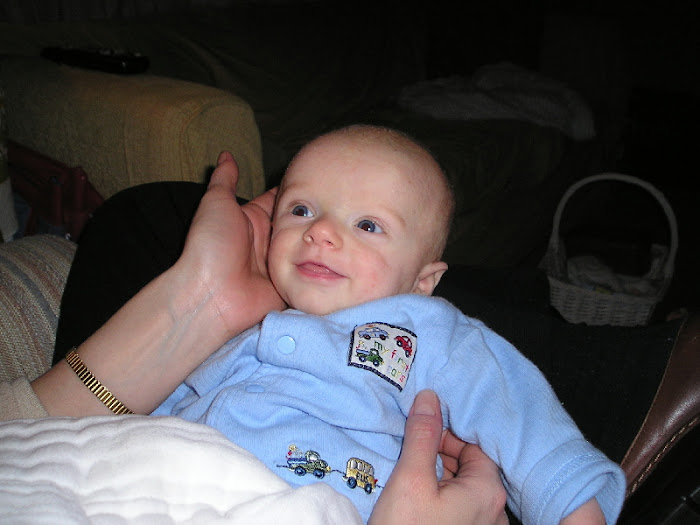
Peter will be eight years old in just thirteen more days!! He wants Klondike bars as his "cake," and a lengthy trip to the library so he can look at lots of books on architecture and geography. He is such a character!
Saturday, October 19, 2013


Overnight feeds with no leaks!
I have to share a great item with those of you who use G-tubes. I came across it from another parent's site, but it took me 7 years of G-tube feeds to find out about it, so I am trying to spread the word from this blog as well.
It is a little device used to secure the feeding connector and keep it from disconnecting from the port of the feeding tube. It does not put holes in clothing like safety pins, nor is it sharp and capable of piercing tubes or skin like a safety pin. It is reusable and we are still on our first one even after 4+ months of use.
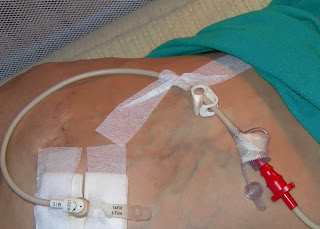
It is called an AMT Clamp Feeding Tube Connector. I have been able to obtain it through both of the enteral suppliers that Peter has had. (We just switched to a new provider last month, and I am so happy, but that is anther post for another time.) Here are photos of the AMT Clamp, along with reference numbers and what it looks like in use:



I hope this information helps other tube-feeders out there. We've had no feeding tube leaks and no torn bedclothes from safety pins since starting with this product!
It is a little device used to secure the feeding connector and keep it from disconnecting from the port of the feeding tube. It does not put holes in clothing like safety pins, nor is it sharp and capable of piercing tubes or skin like a safety pin. It is reusable and we are still on our first one even after 4+ months of use.
It is called an AMT Clamp Feeding Tube Connector. I have been able to obtain it through both of the enteral suppliers that Peter has had. (We just switched to a new provider last month, and I am so happy, but that is anther post for another time.) Here are photos of the AMT Clamp, along with reference numbers and what it looks like in use:


Before clamp is attached to port.
(I always tape medport closed to keep it from opening overnight,
in case you are wondering why it is taped. You could use the
clamp without tape on the medport if you wanted to.)

With clamp attached to port.

Clamp is tiny, flexible, and reusable

As you can see, we run Peter's tube through the neckline of his shirt, rather than under. For him, that works better at keeping the feeding tube from kinking overnight.


I hope this information helps other tube-feeders out there. We've had no feeding tube leaks and no torn bedclothes from safety pins since starting with this product!
Thursday, September 26, 2013
A very dry report of our last trip to Boston
Peter had his check-up in Boston about two weeks ago. We crammed in his intestinal rehab clinic visit, a follow-up with Dr. Jennings (his surgeon), a sedated cardiac MRI, a lab draw, a bone age scan (an x-ray), and a DEXA scan all into two days.
Peter is doing well enough overall to stay off TPN for now, but he is continuing to lose weight over the last several months. His arm circumference and skin fold measurements have both gone down. He has grown some in height, so he has been able to digest enough calories for lateral growth, but if he cannot stop losing weight, then he may need to go back on TPN to supplement his growth. It looks like his caloric intake is about 2300 calories a day, which should be enough, but there is some degree of malabsorption. We are currently trying to squeeze in a little more calories here and there over the next couple of months to see if we can prevent a need to return to TPN.
Peter's vitamin A and D levels are remaining low even with high supplementation. His platelets are under 30,000 now, which is a little lower than is has been. To put that is reference, a normal count for most people is 150,000 to 400,000. He still clots quite well though, which Dr. Kamin says is because his body has slowly gotten to that point and the platelets have functionally adapted. His white count is still considerably low as well (under 2). Looking at better lab news, the iron supplementation has proven good for resolving his anemia. The rest of the labs seemed OK enough, with the exception of calcium in his urine seeming to go up higher. Our plan is that he will have no calcium-containing foods for 4 hours before the next urine sample, and hopefully we will see less calcium in the urine.
Bone-wise, it looks like Peter's osteopenia is no worse. It is still present, but his bone-age is about right for his age, and that is good news.
Besides the let-down that Peter may have to return to TPN, the other disappointment was in the results of his cardiac MRI. The MRI showed that he now has dilated ventricles, which he did not have in the past. Dr. Kamin discussed possible causes with several of the doctors who are very familiar with Peter's abdominal issues and they do not feel this is related to intestine, liver, or spleen. That is a bit of a relief, as I don't know how much more surgery Peter's abdomen could take. There are two nutritional labs that are going to be drawn this week to see if they could be causing any of this, but that being the culprit is a long shot. The most likely area of concern is the heart or lung and I expect that will be the focus of additional testing.
Our priorities over the cardiac and nutritional follow up are that Peter gets to go trick-or-treating with his siblings and that he gets to celebrate his birthday at home, also with his siblings. Dr. Kamin thought we would be able to work that out just fine. Peter has envisioned such plans for trick-or-treating and for his birthday, and none of us want to disrupt those plans!
Peter is doing well enough overall to stay off TPN for now, but he is continuing to lose weight over the last several months. His arm circumference and skin fold measurements have both gone down. He has grown some in height, so he has been able to digest enough calories for lateral growth, but if he cannot stop losing weight, then he may need to go back on TPN to supplement his growth. It looks like his caloric intake is about 2300 calories a day, which should be enough, but there is some degree of malabsorption. We are currently trying to squeeze in a little more calories here and there over the next couple of months to see if we can prevent a need to return to TPN.
Peter's vitamin A and D levels are remaining low even with high supplementation. His platelets are under 30,000 now, which is a little lower than is has been. To put that is reference, a normal count for most people is 150,000 to 400,000. He still clots quite well though, which Dr. Kamin says is because his body has slowly gotten to that point and the platelets have functionally adapted. His white count is still considerably low as well (under 2). Looking at better lab news, the iron supplementation has proven good for resolving his anemia. The rest of the labs seemed OK enough, with the exception of calcium in his urine seeming to go up higher. Our plan is that he will have no calcium-containing foods for 4 hours before the next urine sample, and hopefully we will see less calcium in the urine.
Bone-wise, it looks like Peter's osteopenia is no worse. It is still present, but his bone-age is about right for his age, and that is good news.
Besides the let-down that Peter may have to return to TPN, the other disappointment was in the results of his cardiac MRI. The MRI showed that he now has dilated ventricles, which he did not have in the past. Dr. Kamin discussed possible causes with several of the doctors who are very familiar with Peter's abdominal issues and they do not feel this is related to intestine, liver, or spleen. That is a bit of a relief, as I don't know how much more surgery Peter's abdomen could take. There are two nutritional labs that are going to be drawn this week to see if they could be causing any of this, but that being the culprit is a long shot. The most likely area of concern is the heart or lung and I expect that will be the focus of additional testing.
Our priorities over the cardiac and nutritional follow up are that Peter gets to go trick-or-treating with his siblings and that he gets to celebrate his birthday at home, also with his siblings. Dr. Kamin thought we would be able to work that out just fine. Peter has envisioned such plans for trick-or-treating and for his birthday, and none of us want to disrupt those plans!
Sunday, August 11, 2013
Peter's formula and diet
This is Peter's diet now that he is off TPN. This post is in response to Kelly's question, but if it might be helpful to anyone else, please feel free to read as well.
Peter is on unflavored Pediasure Peptide 1.0. He takes 300 mL by G-tube at night, and to that we add 67 grams of Duocal and 15 grams of Beneprotein. Throughout the day, Peter eats the following by mouth:
400 grams plain Cabot Greek Yogurt (it has 22 grams of fat per cup)
180 to 200 grams of pureed fruit
180 grams of pureed meat
90 to 100 grams of pureed vegetable with about 5 grams unsalted butter
630 ml of Lactaid milk
60 to 240 ml of water
We add 10 grams of Duocal to his daytime food twice a day
About 1 Tbsp of Barleans Omega Swirl fish oil (He just started that a month ago, now that he is off IV Omegaven. So far, it is the only enteral fish oil that doesn’t make him smell like fish. We use the Key Lime flavored one.)
He will take additional foods on some days, like an ounce of fresh fruit, or an ounce of cookies, but that food is more like a “bonus” to his regular intake.
We have found that finding foods low enough in sodium is a huge challenge. Commercial jarred baby food is generally pretty low in sodium. We have been buying jars of baby food for Peter for years, even though he is seven. The Duocal and Beneprotein have no sodium, so they add more calories and protein to Peter’s formula without added sodium or fluid, both of which aggravate his ascites.
Although Peter can chew many foods well, he is slow with the process, and by the time he has taken just a few bites, he says he is full. We have basically been tricking his mind/body by feeding him his pureed food quick enough that it all gets in him before he feels full. For example, for dinner, he will have two jars of pureed meat (120 ounces) within 3 to 5 minutes. We set the timer for 10 minutes and he is free to go play then. After the timer rings, he comes back to finish the rest of his dinner, which is a third jar of pureed meat and 90 grams of pureed vegetable. Then he is done his meal. His lunch and breakfast are done in the same manner, but with the Cabot yogurt and pureed fruit.
One of us usually feeds Peter, as when he feeds himself, he goes so slow that his body tells him he is full before he has gotten very far. That may sound very drastic, but in our case the need to get Peter off TPN to preserve the liver far outweighed the need for him to be able to feed himself independently. (He already has possible cirrhosis, definite fibrosis.) He holds and drinks his own milk, although he needs constant encouragement to drink it three times a day. Any snacks he feeds himself. As we move further along, I expect he will eventually take over his own feedings and even move away from purees. We are attempting some of that now that we have more free time without the TPN and ostomy issues.
Of note, it took us several years to work up to this amount of feeds with Peter. He literally started with 5 ml of milk once a day at about age 1. There were many times over several years that we would push Peter too hard with enteral feeds and he would vomit. Then we would have to back down from the amount of feeds we had gotten up to and try a more gradual approach to the new feeding goal. At this point, we seem to be at a good point with Peter’s caloric enteral intake, where he is slowly gaining some weight, but not feeling so full he is nauseated.
Lastly, Peter has most of his intestine. It has scarring and a unique pathway, but it is mostly all there. From what I understand about short-gut, having enough bowel length is a very big factor in getting off TPN/IV fluids.
Wednesday, August 7, 2013
Riding on the scooter now
This summer, Peter has made many strides physically. He says having the ostomy bag gone has made it more comfortable to run. I also wonder if being off TPN has made him generally feel better. Just a few months ago, Peter had very little interest in riding a scooter even one time down the driveway. He would go ever so slowly and complain the whole way. Now he is able to ride the scooter halfway around the block and back, actually enjoying himself and going at enough speed to glide part of the way. Go Peter!
Subscribe to:
Posts (Atom)